Back to Articles
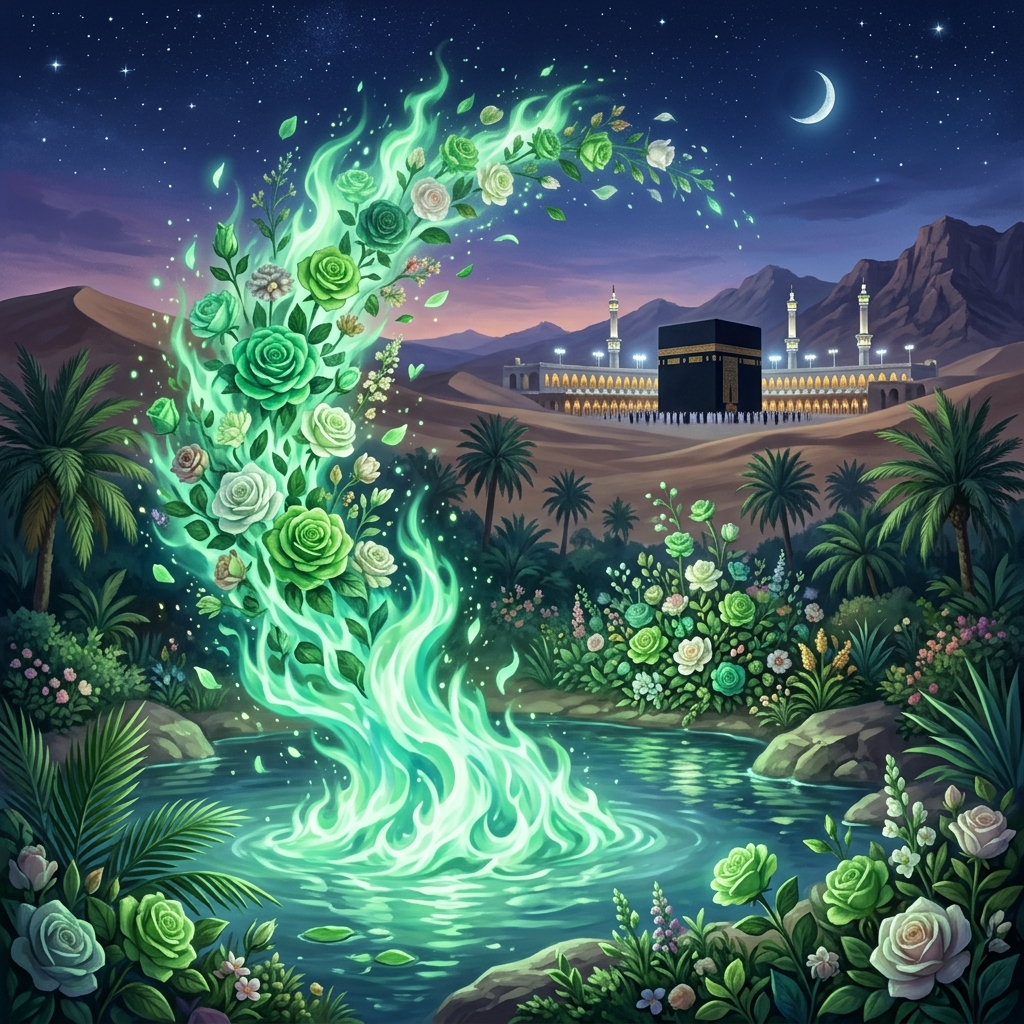
Ashab al-Ukhdud: The Companions of the Trench and the Triumph of Faith
Listen to Article
Listen to the full text of this article
Speed:
A deeply emotional study of the Boy and the King, the sacrifices of the early believers, and the fire of the trench mentioned in Surah Al-Buruj.
### Introduction: The Kingdom of Tyranny
The story of the Companions of the Trench (*Ashab al-Ukhdud*), referenced in Surah Al-Buruj, is one of the most emotionally intense accounts of faith under persecution. It took place in Najran (modern-day Yemen) under the rule of Dhu Nuwas, a tyrannical king who demanded absolute worship from his citizens.
The king relied on an old magician to maintain his control over the people. As the magician grew old, he requested a bright young boy to train as his successor. The king chose a young boy of exceptional intelligence.
---
### The Boy, the Monk, and the Choice
On his daily walk to the magician's house, the boy passed by a Christian monk who lived in a small cell. Intrigued, the boy sat with the monk and listened to his teachings about the One Creator, finding peace that the magician’s spells could never provide. For years, the boy lived a double life—learning magic by day and true faith by night.
The turning point came when a massive beast blocked the city path, threatening the citizens. The boy picked up a stone and prayed: *"O Allah, if the affair of the monk is more beloved to You than the magician, then kill this beast so the people can pass."* He threw the stone, and the beast fell dead. The boy realized that his faith had been confirmed.
---
### The Trial and the Sacrifice of the Boy
The boy began healing the blind and the lepers in the name of Allah. When the king discovered this, he was furious. He executed the monk and ordered his soldiers to take the boy to the peak of a mountain and throw him off if he refused to recant his faith.
At the mountain peak, the boy prayed: *"O Allah, save me from them in whatever way You wish."* The mountain shook, the soldiers fell to their death, and the boy walked back to the palace.
The king then sent him on a ship to be thrown into the deep sea. The boy prayed again, the ship capsized, the soldiers drowned, and the boy returned to the king.
The boy told the frustrated king: *"You cannot kill me unless you do as I command."* The king asked: *"What is that?"* The boy replied:
> *"Gather the entire population in an open field, tie me to a tree trunk, take an arrow from my quiver, place it in the bow, and say: 'In the name of Allah, the Lord of this boy,' and then shoot."*
> — **Sahih Muslim**
The king, blinded by his desire to destroy the boy, did exactly as instructed. He shot the arrow, saying: *"In the name of Allah, the Lord of this boy."* The arrow struck the boy’s temple. The boy placed his hand on his head and passed away.
Upon witnessing this miracle, the entire assembly of thousands cried out: *"We believe in the Lord of this boy!"*
---
### The Burning Trenches of Faith
The king, realizing he had defeated himself, was filled with rage. He ordered deep trenches (*Ukhdud*) to be dug in the streets, filled with wood, and set on fire. He declared that whoever refused to recant their new faith would be thrown into the fire.
The believers, showing absolute devotion, stepped into the flames willingly. The most emotional moment occurred when a mother holding her infant baby hesitated at the edge of the pit, fearing for her child. At that moment, Allah made the infant speak:
> *"O mother! Remain patient, for indeed you are upon the truth."*
> — **Sahih Muslim**
The mother stepped into the fire with her baby, passing from the flames of this world to the peace of Paradise.
---
### Deep Spiritual Explanation & Real-Life Significance
The story of the Trench shows us that victory in the sight of Allah is not always about physical survival; it is about remaining true to our faith until our final breath. The king thought he won by killing the believers, but he lost eternally; the believers lost their physical lives, but won eternal peace.
**Real-Life Example:**
A political prisoner is tortured to renounce their beliefs or sign false confessions to save their life. Choosing instead to remain silent and bear the suffering, trusting in the justice of Allah, is a modern reflection of the Ashab al-Ukhdud.
---
### Authentic References
1. **Quranic Reference:**
*"Destroyed were the companions of the trench—[containing] the fire full of fuel, when they were sitting near it. And they were witnesses to what they were doing against the believers."*
— **Surah Al-Buruj, 85:4-7**
2. **Hadith Reference (Muslim):**
The detailed story of the Magician, the Monk, and the Boy is narrated in Sahih Muslim (Book of Zuhd, Hadith 3005).
---
### Practical Lessons for Daily Life
1. **True Success is Faith:** Do not measure success by physical safety or wealth; measure it by your connection with the Creator.
2. **Utilize Youthful Energy for Good:** The boy of Najran transformed his entire society through his dedication and courage.
3. **Seek Righteous Mentorship:** Find teachers who connect you with the Creator, just as the monk guided the boy.
---
### Frequently Asked Questions
* **Q: Why did the boy suggest his own execution method?**
* **A:** He realized that his personal death would be the means for his entire nation to find the light of faith, prioritizing their salvation over his life.
* **Q: How many people were killed in the trench?**
* **A:** Historical sources suggest that around 20,000 believers were thrown into the fire of Najran.
* **Q: What happened to the king?**
* **A:** Sometime later, the kingdom was conquered by the Christian Kingdom of Aksum, and Dhu Nuwas died in disgrace.
---
### Conclusion
The Companions of the Trench show us the ultimate heights of human devotion. Their story stands as a monument of courage, assuring every believer that the fire of trials is temporary, but the garden of reward is eternal.
Comments (2)
FA
JazakAllah Khair for sharing this. We often forget that what seems like a hardship is actually a hidden mercy from Allah.
Loading comments settings...
SubhanAllah, this beautifully explains the depth of divine wisdom. Truly eye-opening!